

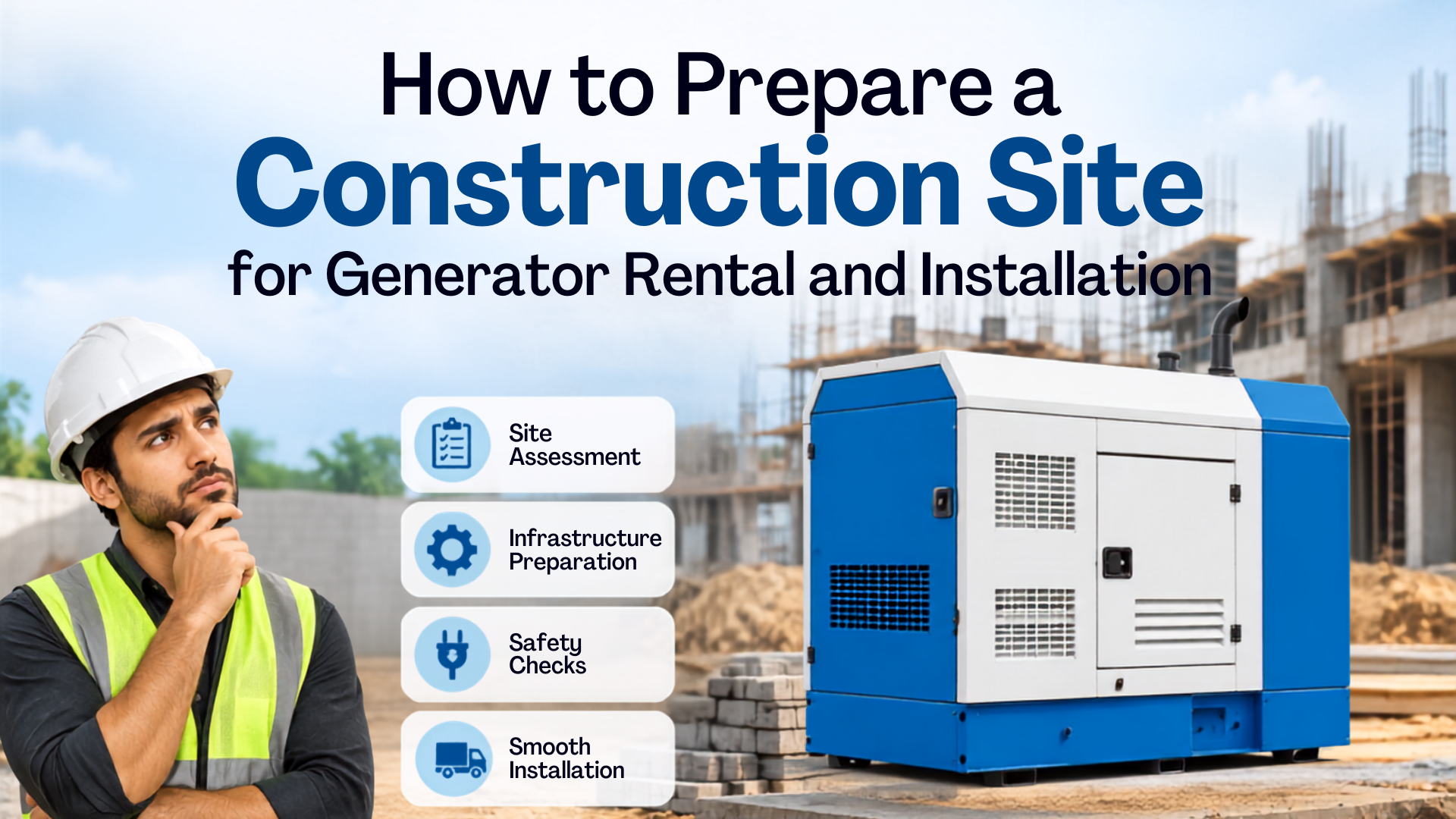
How to Prepare a Construction Site for Generator Rental and Installation
A reliable temporary source of energy is necessary on construction sites due to many needs that need to be fulfilled. If there is no possibility of installing permanent electricity sources on site, one possible solution may be renting a generator. Nevertheless, prior to doing so, one should make some preparations at the construction site.
1. Estimating the Electric Load on the Construction Site
Before procuring the generator, it is necessary to define which machines or systems require electric energy. These may include construction equipment, welders, power tools, lighting, pumps, air conditioners, and even offices on the construction site.
It is also necessary to estimate the load since it is necessary to be aware of machines with a significant starting load. It is essential to do this to avoid generator overload.
2. Choose an Appropriate Place for Generator Installation
Generator should be installed on a solid and leveled ground, capable of bearing the weight of the generator and its vibrations. Moreover, there should be enough space around the generator for ventilation, checking, refueling, and servicing of the machine.
Generators should not be installed near places with constant human traffic or where the construction activity can harm the equipment.
3. Ensure Proper Ventilation
Generators release exhaust gases and generate heat. It is therefore necessary that the installation area has sufficient ventilation for exhaust gases to diffuse properly.
The generator should not be installed in an enclosed or poor ventilation area unless the generator is specially designed and installed with proper exhaust and ventilation arrangement. Exhaust vents should be located far from the reach of workers and buildings as well as air intakes.
4. Make Electrical Connection Arrangements
Electrical connection arrangements should be made prior to arrival of generator at the site. Cables, distribution boards, circuit protection and other electrical components should be selected in relation to generator rating and connected loads.
Cables should be run in a safe manner protecting them against construction site traffic, water, cutting edges and other hazards.
5. Plan Fuel Storage and Refuelling
When it comes to construction projects that last for extended durations, one should consider the availability of the fuel. The fuel usage should be estimated using generator power output, operating duration, and the load on the generator.
The fuel must be stored and transported in the right location by using appropriate containers and other safety mechanisms. When refuelling, it must be done in a safe manner.
6. Consider Noise Pollution and Worker Safety
Generators can generate much noise especially when loaded with a heavy duty. It would be necessary to locate the generator away from where the workers stay.
It is also vital to secure the generator to ensure that no one else gets into contact with it except the personnel handling the generator.
7. Provide Access for Maintenance
There is a need for regular inspection, maintenance, and repairs to the generator during the rental period. Adequate access space for the equipment needs to be left open so as to allow technicians access to filters, control panels, fuel tanks, among others.
An adequate access space for service and fuel vehicles must also be kept.
8. Inspection and Testing Prior to Starting Operations
Inspection of the installation, electrical accessories, fuel system, earthing, exhaust system, and safety precautions should be done before starting the operations. Testing of the generator is required while operating in ideal conditions.
Construction site preparation for renting the generator requires more than just creating access areas for installing the generator. Load estimation, placement, ventilation, electricity distribution, fueling, safety and maintenance are some other crucial issues to make sure of continuous temporary energy supply.
Proper preparation will ensure efficient and safe operation of the generator without disrupting the construction activities.
Post A Comment
Popular Posts
Should I rent a Diesel generator set or buy one ?

Comments (0)