

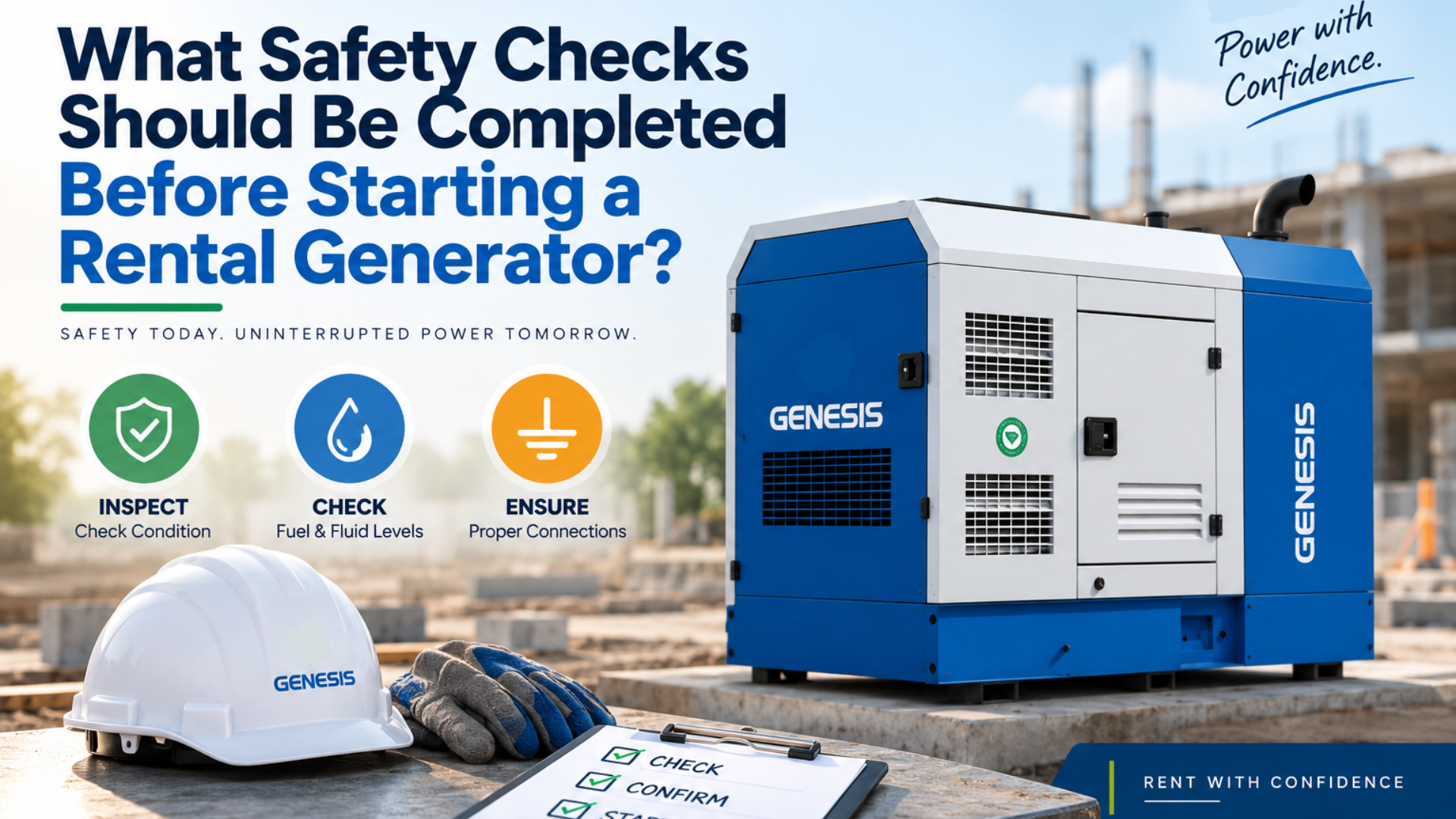
What-Safety-Checks-Should-Be-Completed-Before-Starting-a-Rental-Generator?
Rental generators are commonly used at construction sites, events, commercial buildings, factories and other locations where temporary power is required. Since these generators are often transported and installed at different locations, carrying out basic safety checks before starting the equipment is important.
A proper inspection can help identify potential problems early, protect people working around the generator and reduce the chances of unexpected breakdowns.
1. Check the Generator Location
The generator should be placed on a stable and level surface. The area should have enough space around the generator for proper ventilation, operation and maintenance.
Keep the generator away from combustible materials and areas where water can collect. If the generator is installed outdoors, make sure the location is suitable for the equipment and protected from unnecessary exposure to weather conditions.
2. Inspect Fuel and Oil Levels
Check the diesel level before starting the generator. Look around the fuel tank, fuel lines and connections for signs of leakage.
Engine oil should also be checked using the recommended procedure. Low oil levels can affect engine lubrication and may cause serious engine damage.
Never smoke or use an open flame near the fuel storage or refuelling area.
3. Check for Fuel or Oil Leaks
Walk around the generator and inspect hoses, pipes, joints and connections. Look for diesel, engine oil or coolant leaks.
Even a small leak should not be ignored. Fuel leaks can create a fire risk, while oil or coolant leaks may indicate a mechanical problem.
Any leakage should be addressed before the generator is started.
4. Inspect Electrical Connections
Check the power cables, plugs, terminals and other electrical connections before operation. Cables should be properly connected, protected from damage and routed safely.
Make sure cables are not lying in areas where vehicles or people can damage them. Electrical connections should be handled by qualified personnel, particularly when connecting the generator to a building or distribution system.
5. Check the Cooling System
Inspect the radiator, coolant level and surrounding airflow before starting the generator. Make sure the radiator is not blocked by dust, debris or other materials.
Adequate airflow is important because the engine produces significant heat during operation. Poor ventilation can cause overheating and affect generator performance.
6. Inspect the Battery
Check the battery terminals and cables for loose connections, corrosion or visible damage. Ensure the battery is securely mounted and has sufficient charge for starting the generator.
Do not attempt to start the generator if the battery or electrical starting system appears damaged.
7. Check Exhaust and Ventilation
The generator should have adequate ventilation, especially when operating indoors or in an enclosed area. Exhaust gases contain carbon monoxide and other harmful substances, so exhaust fumes must be directed safely away from people and occupied areas.
Never operate a diesel generator in an enclosed space without an appropriate exhaust and ventilation arrangement.
8. Check Emergency and Safety Equipment
Before starting the generator, confirm that emergency stop controls are accessible and functioning correctly. Keep an appropriate fire extinguisher nearby and make sure workers know where it is located.
Operators should also know the generator's basic controls, warning indicators and emergency shutdown procedure.
A rental generator should never be started without a basic safety inspection. Checking the location, fuel, oil, electrical connections, cooling system, battery, exhaust and emergency equipment can help prevent accidents and equipment damage.
Following the generator manufacturer's instructions and having qualified personnel carry out installation and electrical connections are also important. A few minutes of inspection before starting can help ensure safer and more reliable temporary power.
Post A Comment
Popular Posts
Should I rent a Diesel generator set or buy one ?

Comments (0)