

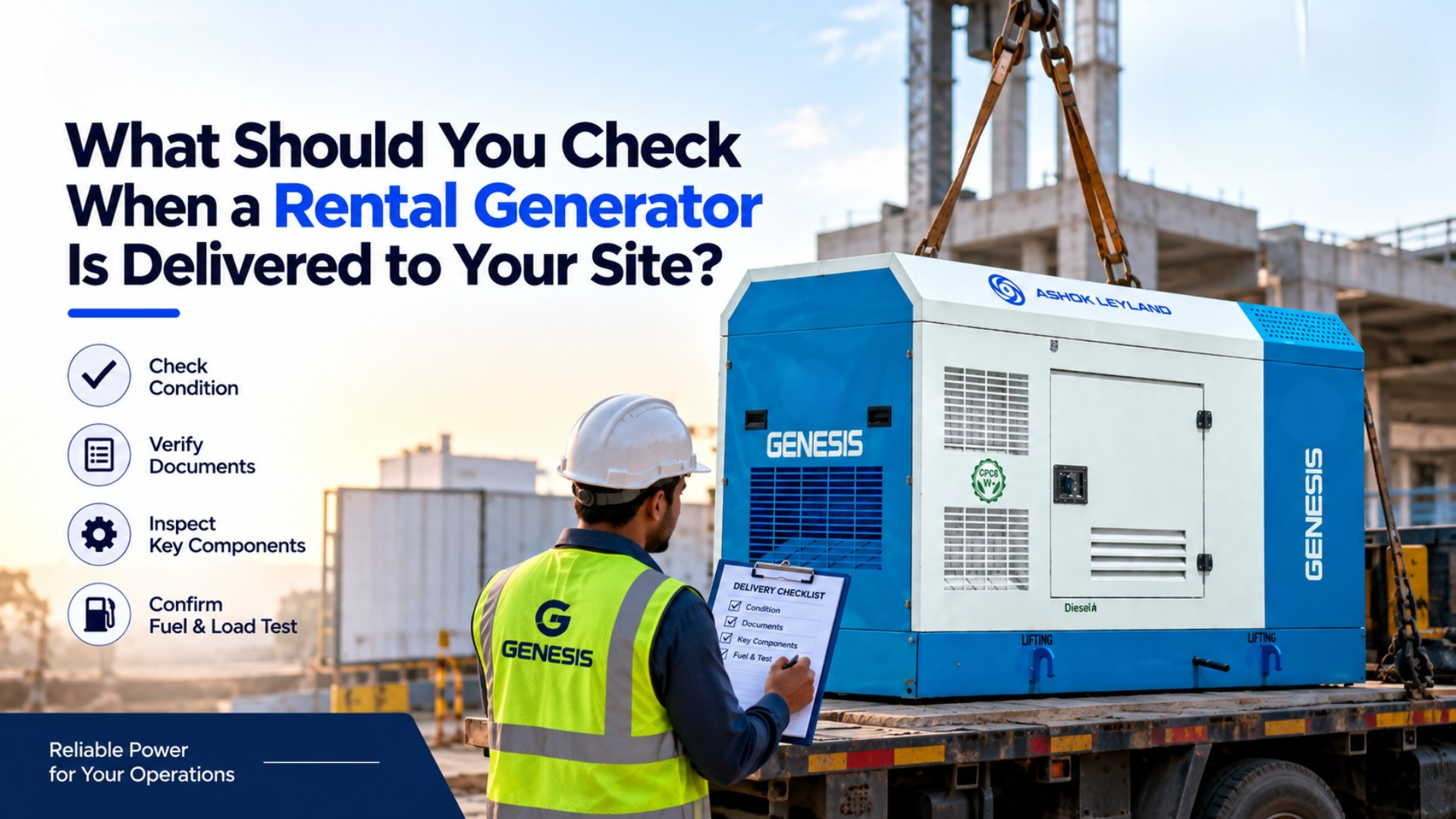
What Should You Check When a Rental Generator Is Delivered to Your Site?
Before the delivery of the generator for use, it is important for you to inspect the generator well before you connect it to your electricity. A good delivery inspection will help you identify the possible damage, fuel leakage, and any other problem that could arise when you plug in your generator for use.
1. Check the Physical Condition of the Generator
Begin with the physical condition of the generator itself. Take note of any dents, cracks, loose panels, door damage, and all other possible damage of the generator during transportation. Moreover, make sure that the ventilating holes are free from obstruction and also that protective covers on moving and heated parts are properly attached. Also, the exhaust system should be maintained properly.
2. Ensure That There Are Sufficient Amounts of Fuels and Fluids
The amount of diesel fuel should be checked for being sufficient to make the operation last for a particular period of time. Furthermore, it is important to ensure that the fuel tank does not show any signs of damage. Also, the engine oil and coolant should be checked.
3. Checking the Battery and the Engine
The terminal connections of the battery should be checked to find out whether there are any signs of corrosion and loose connections. It is necessary to check the belts and hoses, air filter, and cooling system. After the start of the generator, listen to any sounds of malfunctioning of the engine.
4. Electrical Connections
After conducting the test to connect the generator to the electricity system on the site, it is necessary to check that the cables are without any defects and are adequate enough to carry the amount of current being supplied. Compare the voltage and frequency of the generator with the equipment that will be running on it.
5. Inspect Safety Features of the Generator
Ensure that the emergency shut-off switch works. Ensure that the RCD or any other protection equipment works. Maintain a fire extinguisher and keep the area around the generator clear. In addition, the generator should be well ventilated such that the exhaust fumes from the generator do not go into the building and other places.
6. Start and Run the Generator
After the inspection is done, you are required to run the generator and check how it runs. Ensure you have checked for any alarm that comes out from the control panel. Check the frequency and voltage of the generator. There should be no strange sound coming from the generator.
7. Look at the Papers and Possess the Machine
Check the name, model number, serial number, kVA rating, hour meter, and the reading of the fuel meter. The rental agreement, service papers, operating guidebook, and the safety guidebook have to be looked at. Make photos of any damages that have been done in the generator.
A rented generator should not be plugged and started without a pre-start inspection. Conducting the physical inspection, fluid level check, engine inspection, inspection of the electrical components and the overall functionality of the generator will help ensure that the generator is in a condition to be used safely at your location.
Post A Comment
Popular Posts
Should I rent a Diesel generator set or buy one ?

Comments (0)