

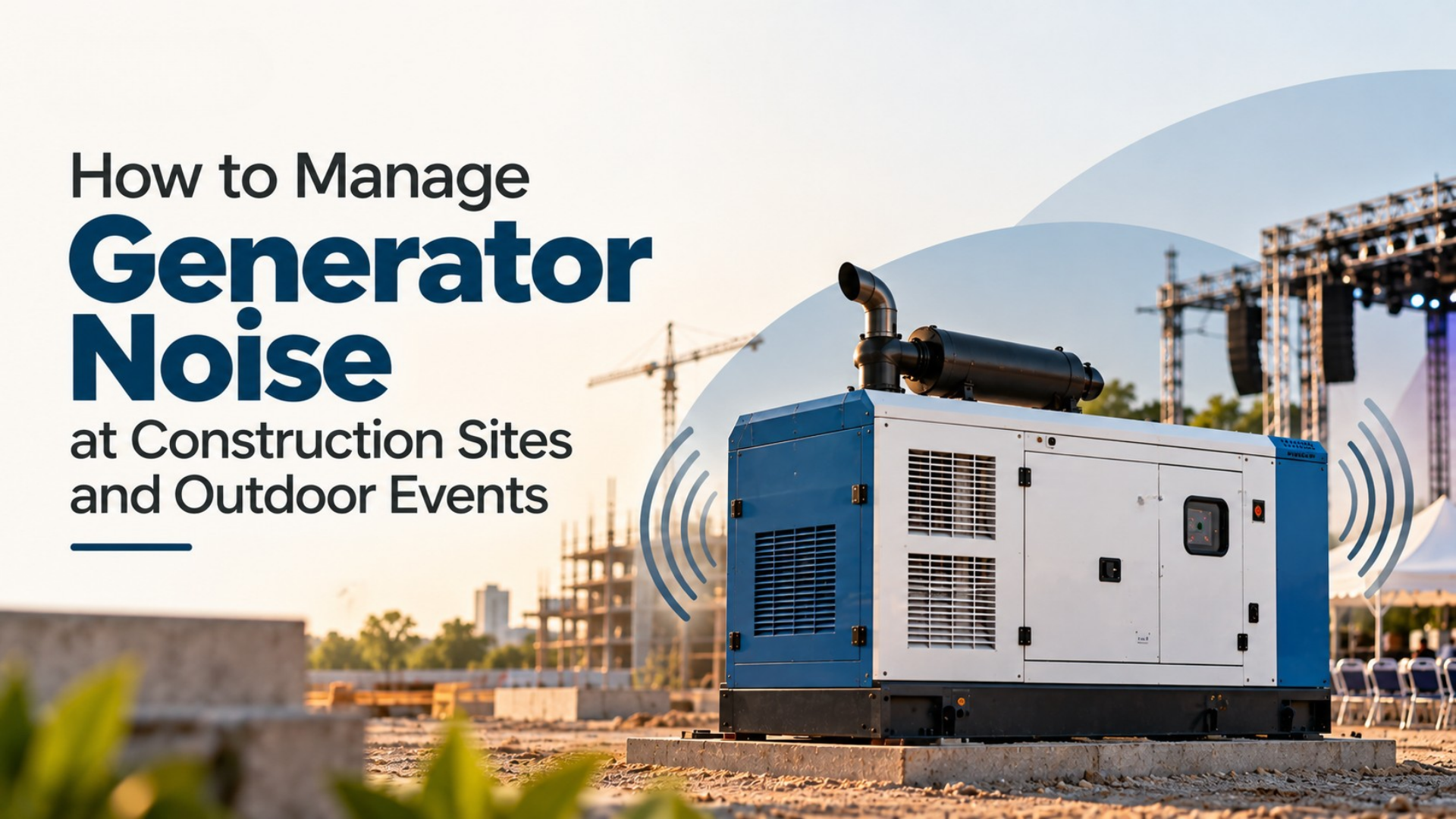
How to Manage Generator Noise at Construction Sites and Outdoor Events
Diesel generators are one such source that generates temporary electricity at places such as constructions sites, outdoor venues, exhibitions, wedding ceremonies, and many other similar activities which take place outside the normal reach of power supply. Although generators generate reliable power sources, the noise created by the engines and exhaust system sometimes causes disturbances to the people around. Proper planning helps in managing the noise problem effectively.
Choosing the Correct Generator
Firstly, one needs to ensure that the generator chosen corresponds to the required load. A generator whose capacity is too high might lead to unnecessary consumption of fuel and noise pollution. For environments where noise is highly considered, generators equipped with acoustic enclosures or are less noisy need to be chosen.
Proper Placement of the Generator
Generator placement can have a huge impact. In construction sites, the generator needs to be positioned away from the resting zones for workers, temporary offices and buildings close by. When it comes to outdoor functions, the generator needs to be located away from the seating zone, stage and food counters.
This ensures proper functioning of the generator.
Consider Acoustic Enclosures or Barriers
Acoustic enclosures serve the purpose of minimizing the level of noise emitted by the generator. They may prove especially effective in cases where the generator has to work near an inhabited space.
In addition, temporary sound barriers or acoustic blankets may be considered for use in construction projects and events. The right placement of such barriers can block the line of sound directly linking the generator and the people. But make sure that the barrier or enclosure never obstructs the airflow around the generator.
Reduce Vibration From the Generator
Generator noise does not necessarily emanate directly from the engine. The vibration from the engine may be transferred to the floor or the support structure and cause more noise.
Ensure that the generator sits on a flat and firm surface. Vibration isolation supports are another way of reducing vibration. This is especially important when generators are operating near any building or structure.
Keep Generator Maintained Properly
If the generator is not well maintained, then the noise level may go up with time due to loose or worn parts such as belts, exhaust parts, engine, among other mechanical issues.
Maintenance ensures that the generator runs properly. These include the engine, exhaust, mounts, cooling system, and other vital parts, which should be inspected based on the manufacture’s recommended maintenance schedule.
Inspect the Exhaust System
One more reason why there may be noises coming from your generator is the exhaust system. You can reduce the exhaust noise with the help of an appropriate muffler. In case you notice sudden generator noise increase, the exhaust system has to be checked.
Always remember that the exhaust gases have to be expelled in a safe way. Do not do anything that can cause any safety risks.
Planning ahead of time for outdoor events
The placement of the generator should be planned during the event planning process rather than waiting until the last moment. The placement of the generator should be considered in light of where the crowd, stage, neighboring properties, entryways, and other occupied areas are located.
The use of long extension cords might permit the generator to be placed further from the crowd; however, the electricity must be properly installed.
A quieter generator system is possible by taking into account several factors such as appropriate equipment, proper location, regular maintenance, vibration reduction, and sound reduction. The noise management of generators during construction and outdoor events will be much more pleasant for workers and less disturbing to those living nearby.
Proper planning of using generators is the key to reliable temporary electricity with minimized noise level.
Post A Comment
Popular Posts
Should I rent a Diesel generator set or buy one ?

Comments (0)